Cross-Sport Data Integration: Soccer In-Play Metrics and Tennis Endurance Indicators for Accumulator Construction
Xander Foster · Sep 3, 2026
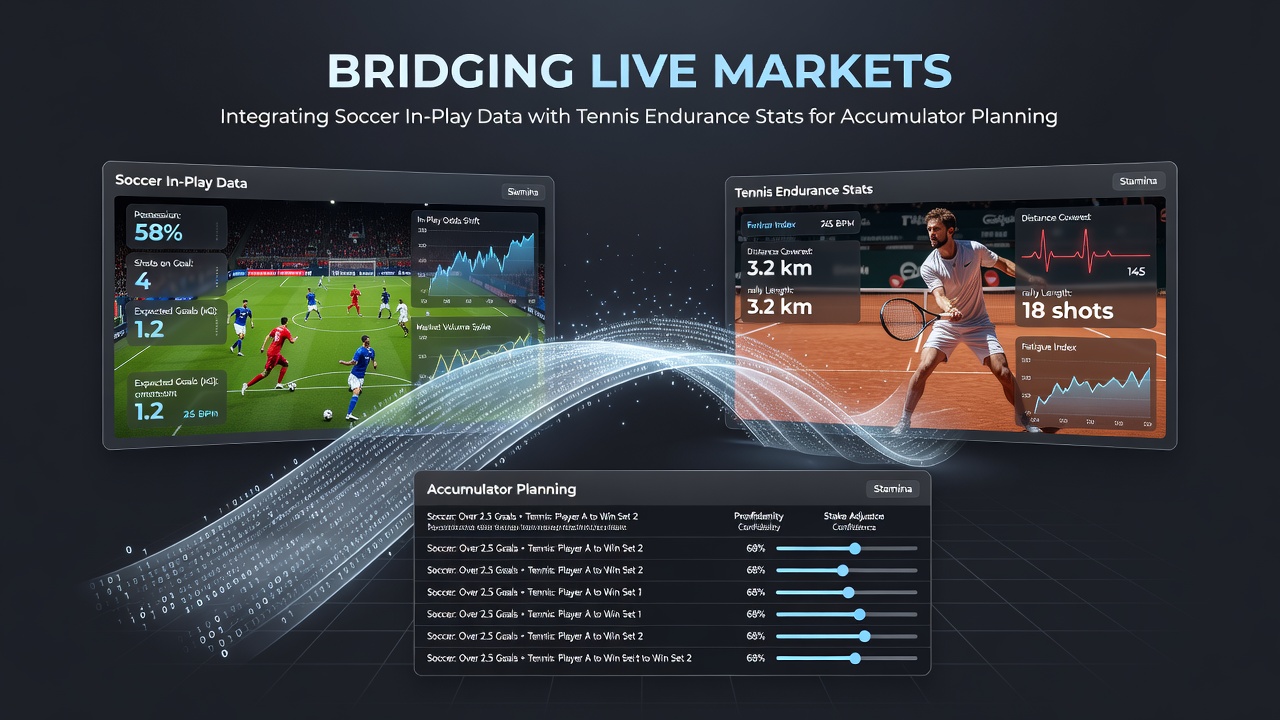
Cross-Sport Data Integration: Soccer In-Play Metrics and Tennis Endurance Indicators for Accumulator Construction
Analysts in sports data fields combine soccer in-play statistics with tennis endurance measurements to support accumulator planning processes where multiple outcomes link together across events. Soccer in-play data includes real-time elements such as possession percentages, pass completion rates, and shot attempts that shift during matches while tennis endurance stats track rally lengths, set durations, and recovery intervals between points. These combined inputs allow systems to adjust probabilities for linked bets that span different sports and time frames.
Core Components of Soccer In-Play Data Streams
Live soccer feeds deliver continuous updates on player positions, team formations, and substitution impacts that influence match trajectories. Research from the Australian Gambling Research Centre shows how such granular inputs help models recalculate expected values mid-match rather than relying on pre-game forecasts alone. Observers note that data points like corner counts and card accumulations often correlate with late-game momentum shifts in leagues across Europe and South America.
Tennis Endurance Metrics and Their Role
Tennis tracking systems record average point lengths, break point conversions, and fatigue signals from extended baseline rallies that extend beyond three sets. Those who analyze Grand Slam tournaments find that players with higher endurance thresholds maintain service hold percentages more consistently in deciding sets. Integration happens when these metrics feed into broader algorithms that weigh cumulative physical demands against upcoming fixtures in accumulator structures spanning multiple days.
Methods for Merging Datasets Across Sports
Platforms process soccer in-play events alongside tennis stamina indicators through synchronized timestamps that align match phases from separate competitions. For instance a soccer match in the English Premier League might run concurrent with a tennis quarterfinal where endurance data updates every game. Software layers apply weighting factors so that soccer momentum spikes adjust risk levels for tennis legs in the same accumulator while accounting for time zone overlaps and rest periods between rounds.
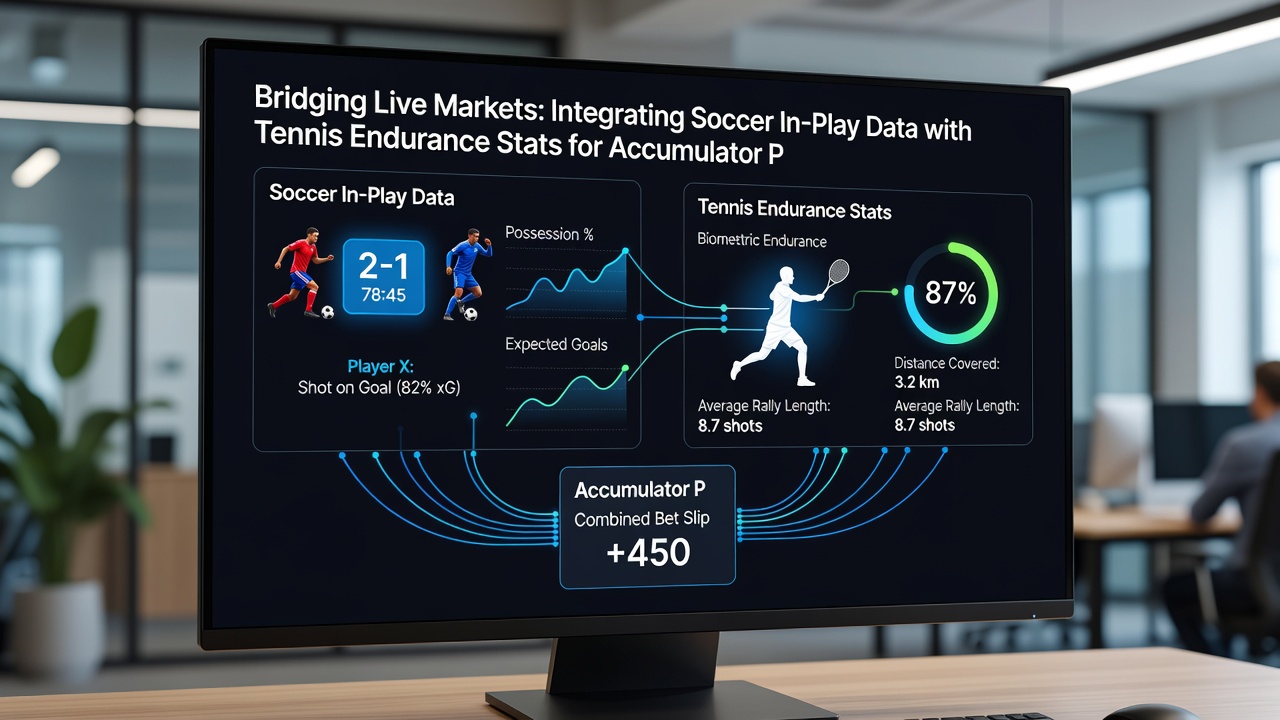
September 2026 schedules feature overlapping ATP and WTA events with major soccer leagues in full swing which creates frequent opportunities for such cross-referencing. Studies indicate that endurance models improve when they incorporate historical recovery data from players who competed in both clay and hard court sequences within short windows. Teams handling these calculations often draw from multiple sensor sources including wearable devices and optical tracking systems deployed at venues worldwide.
Accumulator Planning Applications
Accumulator builders use the fused datasets to sequence selections where early soccer results inform later tennis stakes within the same multi-leg structure. Data shows that endurance thresholds in tennis become more predictive when paired with soccer in-play fatigue indicators from teams playing midweek fixtures. This approach relies on statistical correlations rather than isolated sport analysis and requires constant recalibration as live feeds arrive from different time zones.
Industry reports from the North American Association of State and Provincial Lotteries highlight how aggregated sports data volumes grew through 2025 and into 2026 prompting more sophisticated integration tools. Those managing accumulator portfolios apply filters that exclude legs when endurance metrics drop below established baselines or when soccer in-play signals indicate defensive collapses. Such filters operate through rule-based engines that update automatically rather than through manual intervention.
Challenges in Data Synchronization
Latency differences between soccer video feeds and tennis point-by-point logs create occasional mismatches that demand buffering protocols. Weather variables at outdoor tennis venues add another layer while indoor soccer arenas maintain more stable conditions. Analysts address these by building redundancy into models so that missing tennis endurance readings pull from comparable historical matches instead of halting the entire calculation chain.
Conclusion
Integration of soccer in-play data with tennis endurance statistics supports structured accumulator planning by providing layered probability adjustments across concurrent events. Systems continue to evolve as sensor technology and processing speeds advance through 2026 with contributions from research bodies in multiple regions. The process remains grounded in measurable inputs that link physical performance trends from two distinct sports into unified decision frameworks.