Tennis Match Rhythms Guide Stake Modifications in Prolonged Play
David Schulz · Nov 13, 2026
Tennis Match Rhythms Guide Stake Modifications in Prolonged Play
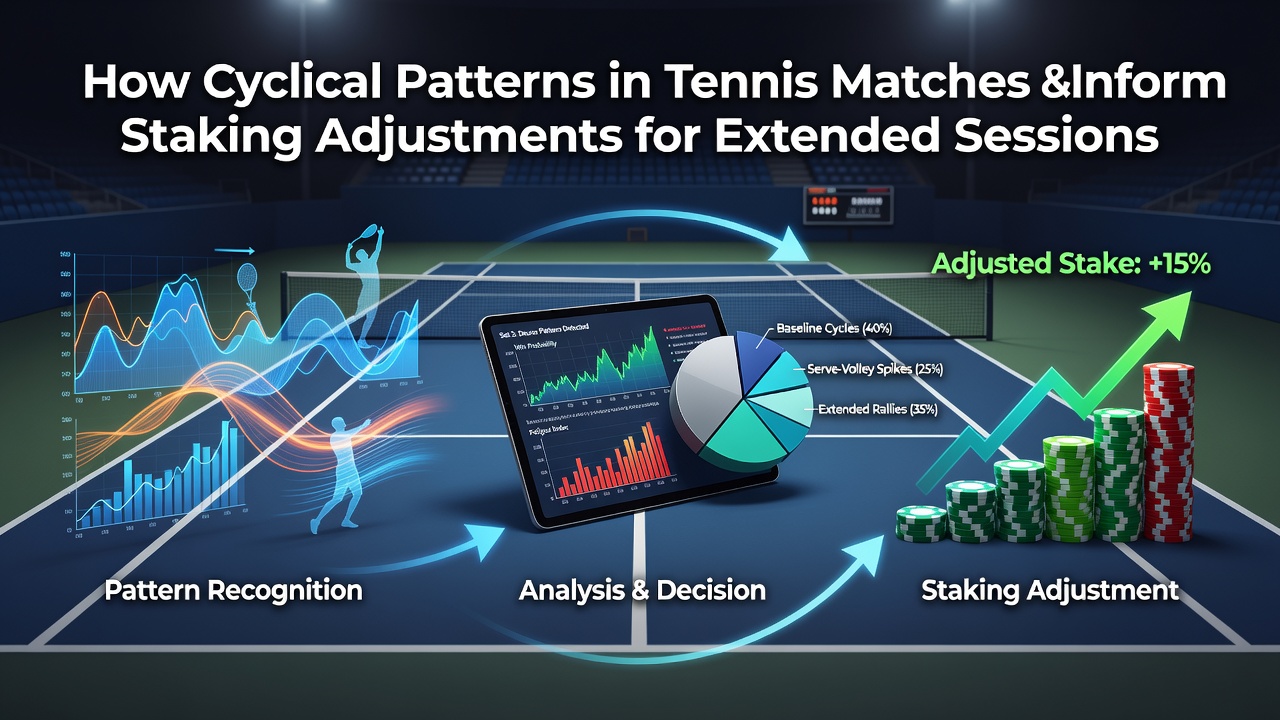
Observers note that tennis matches often follow repeating rhythms tied to serve breaks, fatigue points, and set transitions, and these patterns supply data points for adjusting stakes during extended betting sessions. Research from match databases reveals that elite players experience service hold percentages that dip in the third and fifth sets, creating windows where bettors recalibrate exposure rather than maintain flat amounts across all games.
Identifying Core Cycles in Match Data
Analysts track how games cluster around predictable intervals, such as the seventh or ninth game of a set where break opportunities rise according to historical serve statistics. Data compiled across Grand Slam archives shows that players who win the first set maintain an edge in the second set 62 percent of the time, yet this advantage narrows sharply once a match reaches three hours. Those who study these sequences adjust stake sizes downward after the initial set when the opponent demonstrates recovery patterns documented in prior encounters.
Break-point conversion rates also move in waves, with conversion climbing above 45 percent in later sets for players who conserve energy early. Figures released by the Association of Tennis Professionals indicate that extended rallies in the fourth set correlate with higher error counts, prompting observers to reduce stake increments at those stages instead of chasing earlier momentum. This approach draws from longitudinal records rather than single-match intuition.
Applying Adjustments Across Multiple Sessions
Bettors managing extended sessions on platforms that cover multiple matches simultaneously use cycle recognition to shift allocation between courts. When one match enters a tiebreak phase, historical outcomes show volatility spikes, so capital shifts toward steadier contests still in early sets. Records from the Women's Tennis Association demonstrate that matches exceeding two hours and forty minutes produce a 28 percent increase in unforced errors during deciding sets, a metric that informs proportional stake reductions.
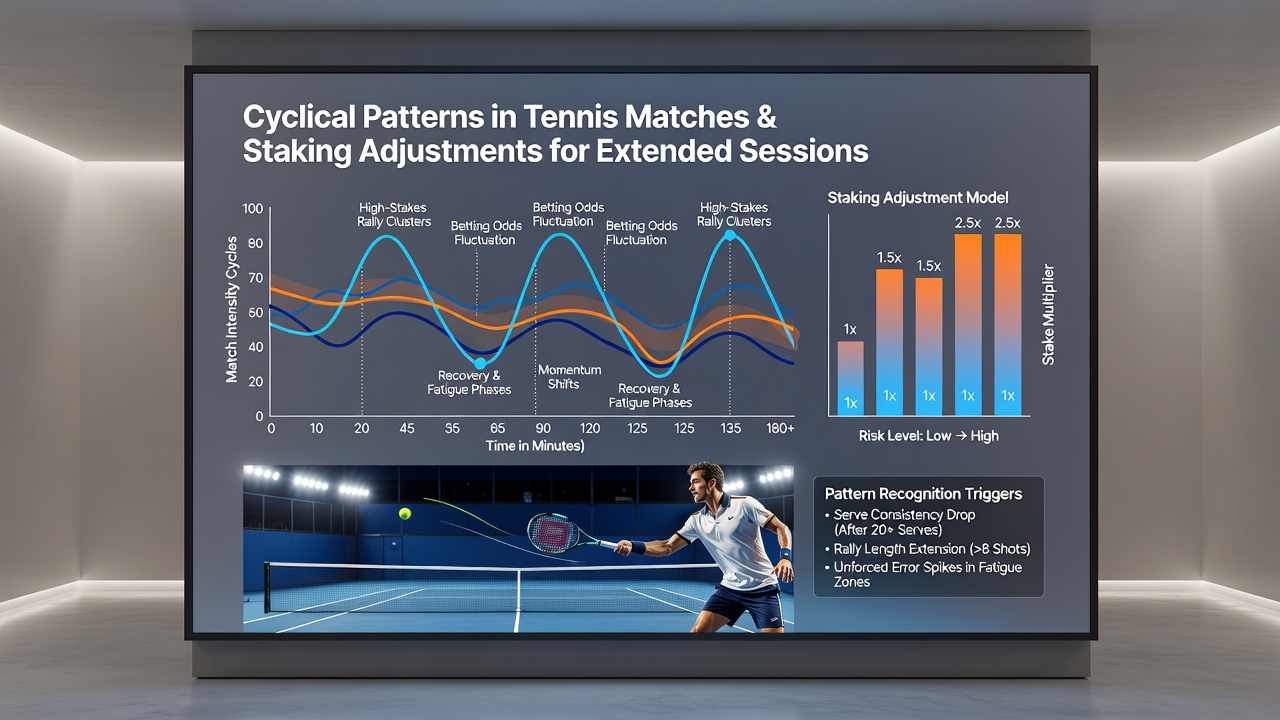
Stake scaling follows a progressive model where initial exposure remains modest until the second set confirms the cycle direction. Once the pattern stabilizes, such as repeated hold sequences or fatigue-induced double faults, allocations increase by measured percentages drawn from season-long aggregates. Canadian researchers at the University of British Columbia published findings in 2025 that linked heart-rate recovery intervals between sets to performance drops, offering quantitative backing for these timing decisions.
Tracking External Variables That Influence Cycles
Surface type and weather conditions alter cycle lengths, with clay matches extending break opportunities by an average of 12 percent compared with grass according to International Tennis Federation compilations. Bettors therefore widen stake adjustment windows on slower surfaces while tightening them indoors where rallies shorten. November 2026 schedules at the ATP Finals in Turin introduce additional indoor variables, including faster court speeds that compress cycle detection into fewer games.
Player-specific medical histories further refine these models, as documented recoveries from prior injuries correlate with late-match dips in first-serve percentages. Observers cross-reference public injury reports with performance logs to anticipate when a cycle may accelerate or stall, then apply corresponding stake caps. This layered approach relies on publicly available match statistics rather than proprietary signals.
Conclusion
Match databases continue to expand, supplying finer granularity for identifying serve-hold oscillations and fatigue thresholds that shape staking sequences. Those who integrate these documented patterns maintain consistent exposure frameworks across sessions that stretch through multiple days of tournament play. Data from governing bodies and academic analyses supplies the foundation for adjustments that respond to observed rhythms instead of isolated results.